
The Gripe With The Swipe
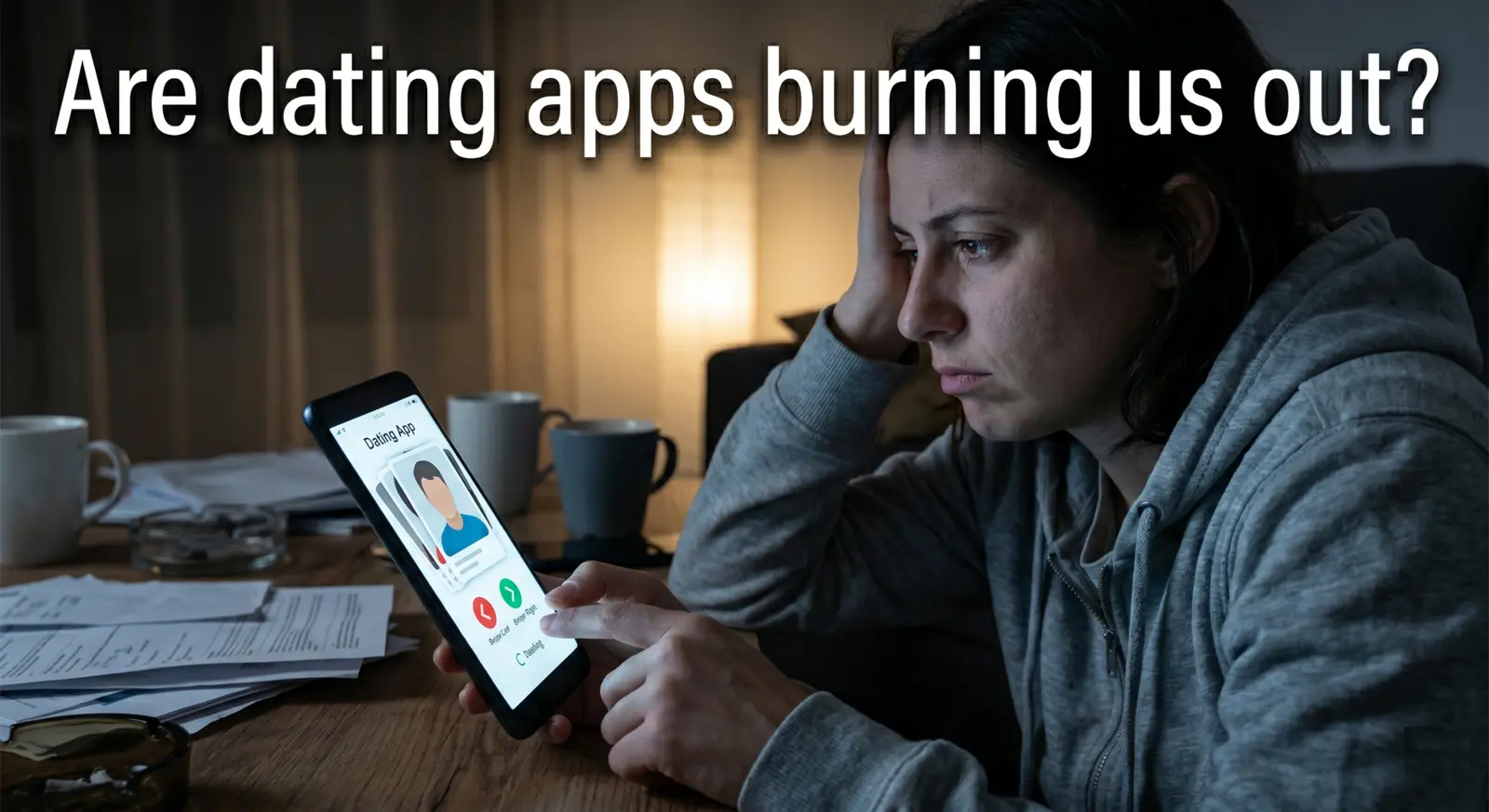
Dating apps are broken. While once seeming a promising way to meet people with expanded choice and compatibility through algorithms, the overall effectiveness of dating apps fostering meaningful, lasting relationships has proven far more questionable. There are many issues with today’s dating apps, and one of the most significant is the endless stream of profiles, creating an illusion that someone better is just one swipe away.
The Slot Machine Mechanic
Most dating app companies are strongly incentivised to keep you swiping, shaping how these platforms are designed. The swipe mechanic is similar to a slot machine: you don’t know when the next “match” will come, creating a cycle of anticipation and reward.
This is known as variable reinforcement, the same principle used in gambling and social media platforms. Apps aim for a middle ground that keeps you hopeful but not “finished”. If you get too few matches, you feel discouraged and leave; too many, you may quickly pair up and leave. A cycle is created where users feel like they’re making progress, without necessarily reaching a satisfying outcome. So they just keep on swiping.
The Toll of Digital Addiction
These days, digital addiction is a very serious issue worldwide, with 1 in 8 adults in the UK suffering from a form of behavioural addiction, including excessive use of the internet and social media platforms. Negative effects on mental health include increased anxiety, depression, and can lead to ADHD.
Constant swiping and exposure to rejection, whether explicit or implied, can lower self-esteem and create anxiety. Users may begin to internalize a lack of matches or responses as a reflection of their worth. At the same time, the intermittent reinforcement of matches and messages can make the experience addictive, keeping people engaged even when it is not fulfilling. This cycle leads to burnout, where individuals feel exhausted and disillusioned with dating altogether.
According to a Forbes Health survey, 78% of respondents reported feeling emotionally, mentally and physically exhausted by dating apps.
The biggest reason for this (40% of respondents) was the inability to find a good connection with someone else. This was followed by 35% being disappointed by people; 27% feeling rejected; 22% with swiping and 21% with time spent using the apps.
The Illusion of Compatibility
Additionally, the algorithms that power many dating apps are not as effective as they are often portrayed. While they may account for basic preferences, human relationships are far too complex to reliably be predicted by data alone.
Compatibility involves nuanced factors such as values, chemistry, communication styles, timing and emotional readiness — elements that are difficult to quantify. As a result, matches generated by these systems do not necessarily translate into meaningful connections.
A Return to Organic Connections
Finally, dating apps fail to replicate the organic ways in which relationships traditionally form. Meeting through shared connections, interests and activities, mutual friends or chance encounters allows people to observe each other in context and develop attraction. These environments provide richer information about personality and behaviour than a profile ever could. By contrast, dating apps isolate individuals from these natural settings, compressing the process into a narrow and artificial format.
Is finding a partner becoming yet another chore rather than an exciting journey? Is there a more authentic way to find connections in our current, crazy, exponentially expanding technological era we find ourselves in?
They say “all roads lead to Rome”. Do they?
Sources
- Collyer, A. (2025) Addiction in the digital age: The new epidemics, UK Addiction Treatment Centres. Available at: UKAT Blog (Accessed: 25 April 2026).
- (No date) Survey: 78% of Gen Z report dating app burnout – Forbes Health. Available at: Forbes Health (Accessed: 25 April 2026).